
 Image 1 of 1
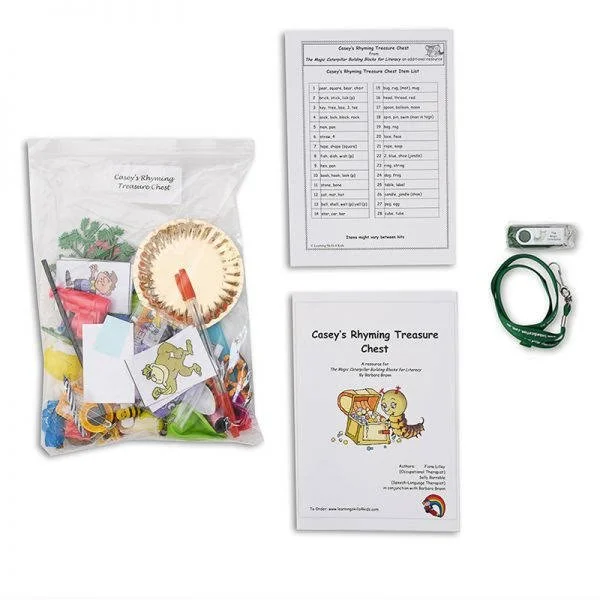
Learning to attend to words that end with the same group of sounds (rime units) is an important phonological skill that develops prior to formal reading, writing and spelling. This kit aligns with Barbara Brann's 'Magic Caterpillar's Building Blocks for Literacy Framework' and has been developed with her permission by Occupational Therapist, Fiona Lilley and Speech Language Therapist, Sally Barrable.
The items can easily be stored in a clear plastic container for ease of use.
Suitable for:
Classroom teachers, education support staff
Families supporting young children with development of early literacy skills
Kindergarten Teachers/ Early Learning Centres
Tutoring groups focussed on developing early literacy skills
Educational Benefits
Strengthening early rhyming skills facilitates early reading success
Explicitly instruction in rhyme significantly improves the development of this skill
Support Reading and writing success beyond foundational stage
Phonological awareness skills are reliable predictors of later reading success